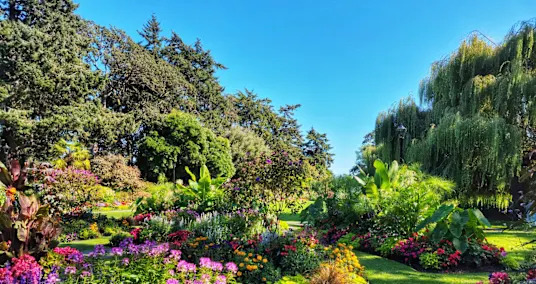
If you're looking for a tree to plant in your yard during spring that offers up pretty blooms through the summer, take a look at the Japanese tree lilac (Syringa reticulata). Generally speaking, many trees that flower do so in spring and tend to be mostly done blooming around May, but this lovely tree waits until June to come to life. Its flowers form fluffy clusters of white-ish flowers that grow up to a foot in length. Although the flowers only last for about two weeks, they fill the air with a nice musky fragrance that makes for a good way to ring in summer.
Beyond its late-season beauty, the Japanese tree lilac is an ideal fit for most yards. Once it's fully mature, it'll reach a height of around 25 to 30 feet and a width of 15 to 25 feet. This helps you make the most out of a small backyard, as it shouldn't crowd out your house or get ultra tangled with overhanging power lines. The tree is a good choice for any full-sun spot in your yard with plenty of air circulation; it can adapt to a variety of soil types, as long as it is rich and well-draining.
The Japanese tree lilac is super cold-hardy, thriving in USDA Hardiness Zones 3 through 7, and becomes drought-tolerant after it gets established. It rarely struggles with pests, disease, or other issues when planted in a location that's suitable for it. The tree does have some susceptibility to lilac leaf miners, scales, lilac borer larvae, or minor bacterial blight and fungal issues. With a bit of mulching and pruning, however, this lilac offers low-maintenance beauty and a spectacular summer kickoff.
Read more: 9 Birds You Do Not Want To See In Your Yard
How Japanese tree lilac creates a bird and pollinator paradise

The Japanese tree lilac doesn't just make your yard look good; it's also a terrific resource for your local pollinators. Because it blooms later in the season, between springtime florets and autumn nectar, the tree and its blooms help fill that gap for pollinators and keep them happily fed and functioning. When those giant flower clusters open up in June, they'll quickly attract the likes of bees and even stunning butterflies like the tiger swallowtail, which enjoy the nectar-rich blooms. You'll likely even see hummingbirds stop by for a few sips, making your yard a popular stop in the neighborhood during one of the warmer months of the year.
And, of course, you'll see that your other feathered friends love the Japanese tree lilac, too. The tree has a more-or-less rounded canopy, plus sturdy branches, making it a terrific place for songbirds to build a nest or enjoy some nice, shady respite from the burning summer heat. Plus, once the flowers drop after a couple of weeks, they turn into brown seed capsules. That's another helpful food foraging option for birds, even into winter as temperatures start to dip, and a great way to attract birds to your garden year-round. By planting one near your backyard patio or big front window, you'll get a front-row seat to all kinds of wildlife activity and a flat-out gorgeous tree. The Japanese tree lilac is a solid all-around pick, as it's easy to grow, stunning to look at, and helpful to your local pollinators. You can't beat that.
Enjoyed this article? Get expert home tips, DIY guides, and design inspiration by signing up to the House Digest newsletter and adding us as a preferred search source!
Read the original article on House Digest.
LATEST POSTS
- 1
 The 2026 'Super Bowl of Astronomy' starts today — here's what's happening
 - 2Home Machine Basics: An Exhaustive Purchasing Guide
- 3The teen queen bee of 'Laguna Beach' is now a 'cringey' mom
- 4As nations push for more ambition at climate talks, chairman says they may get it
- 5Flat Earth, spirits and conspiracy theories – experience can shape even extraordinary beliefs





- Ukraine demands army of 800,000 under peace plan
- Undeniably popular Historical centers: Where Craftsmanship and History Meet
- It's time for Artemis II to break Apollo 13's distance record. What to know about the moon flyby
- Immortal Style: Closet Staples for Each Age
- Overseeing Individual budgets Successfully
- How to see the Ursids, the final meteor shower of 2025
- How do my eyes adjust to the dark and how long does it take?
- It May Take a Year to Restore Abu Dhabi Aluminum Output, EGA Says
- Visiting This Japanese City Just Got A Little More Expensive (Here's What Travelers Should Know)