When you buy through links on our articles, Future and its syndication partners may earn a commission.

Europe's Ariane 6 heavy-lift rocket took to the skies for the fourth time ever today (Nov. 4).
An Ariane 6 lifted off from Europe's Spaceport in Kourou, French Guiana today at 4:02 p.m. EST (2102 GMT; 6:02 p.m. local time in Kourou), carrying the Sentinel-1D Earth-observation satellite to low Earth orbit (LEO).
The Ariane 6 deployed Sentinel-1D about 33.5 minutes after liftoff today as planned, at an altitude of 440 miles (708 kilometers).

The Ariane 6 is the successor to the Ariane 5, which retired in July 2023 after 27 years of service. The new rocket debuted with a checkered July 2024 test flight, then followed that up with two fully successful operational launches, in March and August of this year.
Ariane 6 made it three in a row today with the launch of Sentinel-1D, which is part of the European Union's Copernicus Earth-observation program.
The Sentinel-1 series of satellites capture detailed radar imagery of Earth, "performing in all weathers, day and night," European Space Agency (ESA) officials wrote in a Sentinel-1D mission description. "This service is vital for disaster response teams, environmental agencies, maritime authorities, climate scientists — and other users who depend on frequent updates of critical data."
Three Sentinel-1 satellites had launched before today, and two of those remain operational (Sentinel-1A and Sentinel-1C). Sentinel-1D will replace Sentinel-1A, which has been eyeing Earth from orbit for 11 years — well beyond its planned operational lifetime, according to ESA.
"The Sentinel-1D satellite will work in tandem with Sentinel-1C to generate timely data," agency officials wrote in the description. "Both satellites have a C-band synthetic aperture radar (SAR) instrument on board, which captures high-resolution imagery of Earth's surface. They are also equipped with Automatic Identification System (AIS) instruments to improve detection and tracking of ships."

Today's launch was Europe's fifth orbital mission of 2025. In addition to the three Ariane 6 flights, the Vega C smallsat launcher — which, like the Arianespace, is operated by the France-based company Arianespace — has aced two missions so far this year, in April and July.
For context, SpaceX has launched 140 missions of its workhorse Falcon 9 rocket in 2025. More than 70% of those flights have been devoted to building out the company's Starlink megaconstellation in LEO.
Editor's note: This story was updated at 1:14 p.m. ET on Nov. 5 with news of successful liftoff, then again at 1:39 p.m. ET with news of satellite deployment.
LATEST POSTS
- 1
 4 Home Rec center Hardware Decisions for Little Spaces
 - 2NASA launches science balloon in Antarctica | Space photo of the day for Dec. 22, 2025
- 3It's been 20 years since MTV's golden couple split. These producers saw it all unravel.
- 4Top 20 Compelling Business Books for Progress
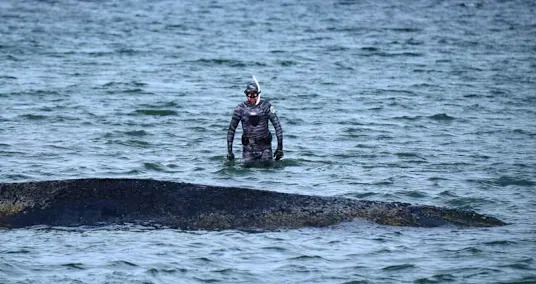
- 5Rescuers again fail to free whale stranded on Germany's Baltic coast


- Mont Blanc road tunnel reopens to traffic after 15 weeks of repairs
- Mexico says a third of 130,000 missing people might be alive, fueling criticisms by families
- One spent $20 on candy. Another paid $700 for a custom costume. Here's how Halloween costs stacked up this year.
- Flights canceled at 40 U.S. airports: Follow live updates as FAA cuts to air traffic take effect amid government shutdown
- Hoist Your Style: Famous Hairdos for Ladies
- ChatGPT served as "suicide coach" in man's death, lawsuit alleges
- Figure out How to Augment Your Rooftop Substitution Speculation
- Disability rights activist and author Alice Wong dies at 51
- In wrangling dark matter, some scientists find inspiration in the Torah, Krishna and Christ